Guide
What Blocks Go With Poplar? Minecraft Palette Ideas
Start with poplar, then choose a foundation, wall, and roof that give it room to stand out.
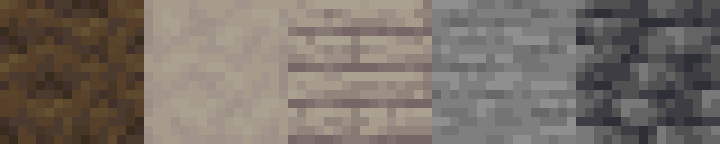
26.3 preview guide. Version information checked September 8, 2026. These texture studies use Java 26.3-pre-2. Poplar is preview content; confirm availability in your edition before starting a survival build.
Start with the wood face you will actually use
Poplar is part of the upcoming dappled forest features described in Mojang's feature overview. The official Java reference at the time of writing is 26.3 Pre-Release 2.
A log, a stripped log, and a plank are different surfaces. Decide whether poplar will be your visible frame, your wall fill, or a small interior detail before matching the rest of the build around it. Place logs in the intended direction when checking a palette: the exposed end and bark are not interchangeable.
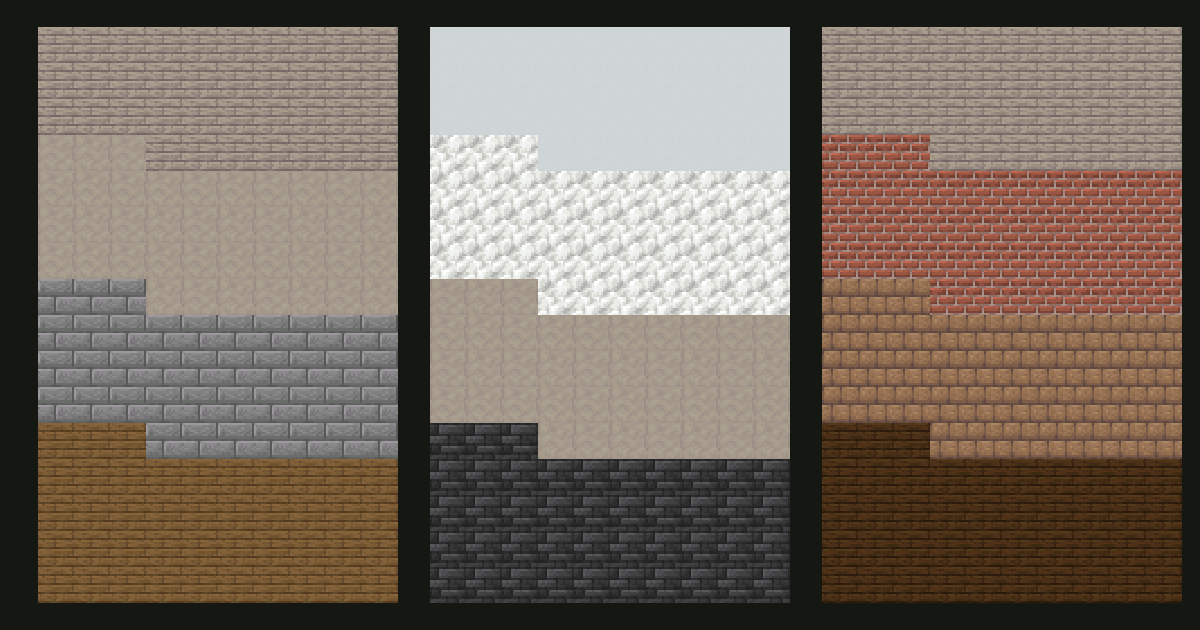
The images in this guide are flat material diagrams, not screenshots of finished cabins. The combinations are starting points to compare in your own lighting and texture pack.
1. Poplar and stone cabin
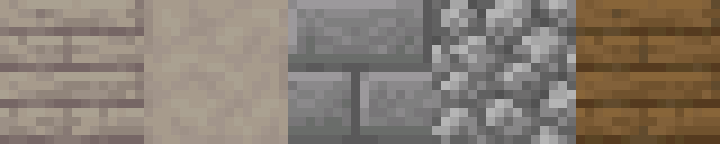
- Wall fill: poplar planks.
- Frame: stripped poplar logs.
- Foundation:
 stone bricks, with
  cobblestone kept to rougher sections.
 - Roof:
 spruce stairs, using
  spruce planks here to show the material color.
Start with a broad poplar wall above a low  stone foundation. Add the frame at corners and openings. The aim is to make the material roles easy to read before you introduce scattered patches.
If the stone base feels too busy, use one stone pattern for the whole foundation. If the wood seems to disappear between the roof and frame, reduce the number of competing wooden details.
Open the poplar cabin palette.
2. Pale walls with a dark roof
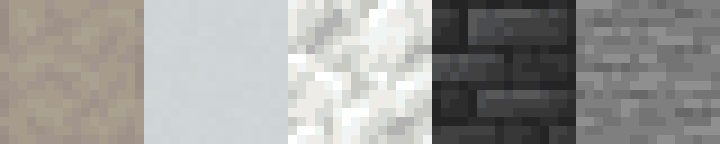
Use stripped poplar for a visible frame,  white concrete for large wall panels, and
  deepslate tile stairs for the roof.
  Calcite can serve as a separate textured wall section; it does not have to be scattered through the concrete.
This arrangement gives the materials different jobs: a quiet wall, a patterned roof, and wood around the openings. Try it on one gable before applying it to all sides of a house.
On a small build, keep the roof and wall simple enough that the poplar frame remains legible. On a larger facade, you have more room for a stone base or another wall texture.
3. Poplar with warm brickwork
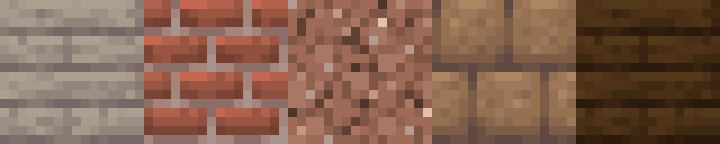
Use poplar for wall panels or an upper floor,  bricks for the chimney,
  mud bricks for a separate garden wall, and dark oak for a restrained roof or entry frame.
  Granite can mark a rough foundation patch where that texture makes sense.
Pick one masonry material to dominate each surface. Using every brick and stone texture in every wall makes it harder to tell where the house ends and the garden begins.
For an autumn setting, add foliage after the building palette works. Leaves change the surrounding color balance; inspect the facade again once trees and planting are in place.
Compare three versions of one facade
Make a small wall with one opening and enough space for a roof edge. Keep its dimensions unchanged while you swap the foundation and trim. Change one material role at a time so you can see which choice improves the result.
Inspect the wall from the doorway, the approach path, and a distant view. A tiny decorative patch may disappear from the path; a strong frame may become the main feature. Keep the view that matters for the way you will use the build.
Planning without preview blocks
You can test the general layout with a wood you already have, but treat that as a shape study. Replacing it with poplar later changes the palette, so repeat the material comparison when the new version is available.
Use the palette generator with a version containing poplar to explore companions. For the broader style, see the cottagecore palette guide. For preview roof options, read concrete and wool stair palettes.